If you buy flowers in Danish supermarkets, you’ve probably come across Queen – known for their potted plants with dense, green leaves and small, colorful flower buds.
Queen is one of Denmark’s largest flower producers and is owned by A/S Knud Jepsen with headquarters in Himmerland. The group supplies flowers to both the Danish market and a number of other European countries.
Danwatch can now reveal that the group is facing turmoil in Turkey, where local workers accuse a nursery, which is partly owned by Queen, of harassment, threats, and dangerous working conditions.
Danwatch has been in Turkey and spoken with several sources who describe a labor dispute that has escalated in recent months.

This is despite the fact that on its website, Queen emphasizes that the company actively works with the UN’s Sustainable Development Goals – including goals 5 and 8, which concern gender equality, decent work conditions, and economic growth.
“We take responsibility in the fight against poverty by ensuring good labor rights, equal pay,” the website states, among other things, about the production in Turkey, which the Danish nursery group established with a Turkish partner in 2010 under the name Queen Türkiye.
In Turkey, however, a different picture emerges.
Mafia Methods
“Expect to be shot in the head if you don’t leave the union.” This was the threat, according to a female employee at Queen Türkiye, when she was approached one evening in March at her home address by a man she believes has a connection to the company.
The woman, who has worked seven years at the nursery, doesn’t know why she specifically was approached, but she has been one of those at the forefront of employees – who are mainly women – joining the union. She does not wish to be identified by name as she still works for the company.
The threat came in the wake of a labor conflict that began earlier this year when over half of the company’s 350 employees joined the BTO-SEN union.
The Turkish union organizes workers in agriculture, horticulture, and forestry and is part of DISK, which is one of the country’s largest trade union confederations. DISK is known for its left-wing, activist stance and its focus on workers’ rights.
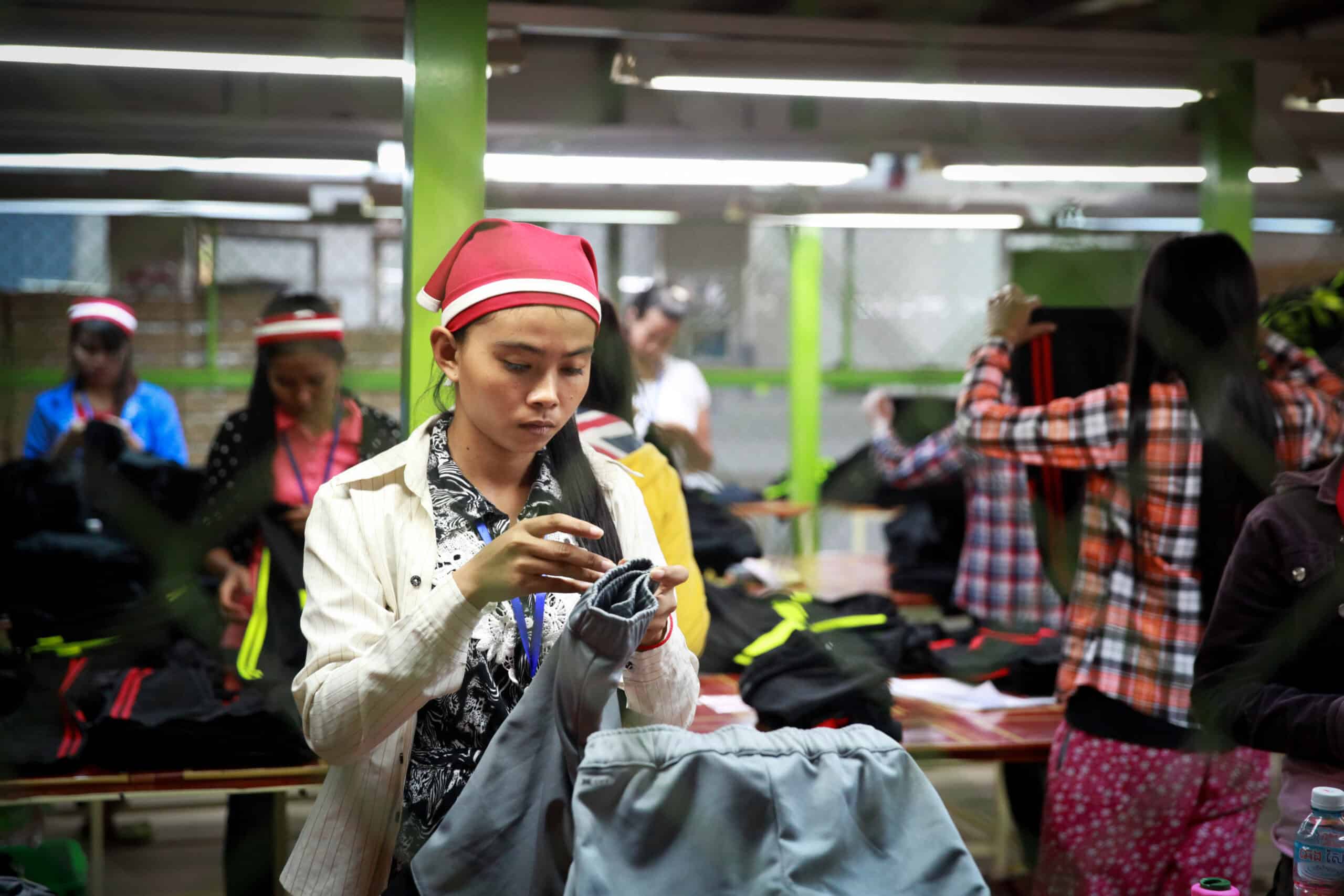
Danwatch meets six female employees after a long workday at the nursery. Although they are tired and frustrated with their working conditions, they are also eager to share their experiences and often speak all at once.
They tell of threats, discrimination, and dangerous work tasks without the necessary safety equipment, which they have experienced from Queen Türkiye’s management after becoming members of the BTO-SEN trade union.
The women all appear anonymously for fear of reprisals, but Danwatch is aware of their identities.
It was the hard physical work – the heavy lifting, the very hot greenhouses, and the long working days – that originally led the women to join the union. But since the conflict began, the physical strain has been compounded by even more stressful psychological pressure.
The company has introduced a ranking system in which management gives employees points based on their performance and behavior. According to the women, union members are consistently given lower ratings than others, which has direct consequences for their wages and working conditions.
Despite many years of seniority, several of the women are on the statutory minimum wage, which is equivalent to about 4,000 Danish kroner per month.
“In the new system, I always get few points, and that means I get the minimum wage, even though I’ve worked here for seven years. It feels like we’re being punished for demanding to be treated with dignity,” says one of the women, whose fingers are red after a day’s work with plant fertilizer.
Another woman recounts that, following an accident at work, she was required to sign a document accepting full responsibility for the accident.
“They use mafia methods. Some of our colleagues have experienced their family members being approached to put pressure on the employees who are union members,” she adds.

Queen (A/S Knud Jepsen)
- Established in 1939 as a family-owned nursery in Hinnerup.
- The world’s largest producer of kalanchoe flowers with approx. 25 million potted plants per year.
- In 2010, they established Queen Türkiye as a joint venture with a Turkish partner. Also has production in Denmark, Vietnam, and the Netherlands.
- Turnover of approx. 66 million Danish kroner in 2022/2023.
Source: Queen’s website, lex.dk
Protests in the Local Community
On a dusty gravel road on the outskirts of the town of Dikili, you turn off towards a large greenhouse area. A large “Queen” sign towers over the gate to the nursery, which is guarded by a security guard.
Many of the area’s residents work in agriculture and horticulture, and a lack of jobs means that people from the surrounding area head to Dikili in search of work.
It’s the limited job opportunities that keep the female employees at Queen Türkiye from quitting despite deteriorating working conditions.
The conflict has gained attention both in the local community and in the Turkish media. In recent weeks, trade unionists and local residents have organized demonstrations in front of both the Danish consulate in Istanbul and the company in Dikili, demanding better working conditions and an end to the harassment.
At the demonstration on Friday, June 20, about 50 men and women stand in the sun with banners and union members in vests in front of the entrance to Queen Türkiye.
The spokesperson from BTO-SEN reads out a statement in which he accuses the company of violating the workers’ union rights.
Another participant takes over the microphone and shouts slogans, which the attendees repeat.
“We are here to show that we support the employees’ struggle,” says an elderly man participating in the demonstration with a sign that reads: “The employees at Queen are not alone.”


Danish Responsibility for Working Conditions
Although the women that Danwatch spoke to are still working at Queen Türkiye despite the pressure and poor conditions, 21-year-old Ali was fired in April after 11 months and 26 days of employment. Employees only gain more rights and better pay after one year of employment.
Danwatch meets him at a small café a quarter of an hour from the nursery in Dikili. Ali does not wish to give his full name, as his mother still works for the flower producer.
The official reason for his dismissal was that Ali was not reliable, but he believes it was due to his membership in the BTO-SEN trade union.
“I really liked my job. I cleaned the greenhouses and drove a forklift truck,” says Ali, who experienced that after joining the union, he was assigned dangerous tasks, which according to him included cleaning large tanks of wastewater and repairing greenhouse roofs without the necessary safety equipment.
“They tried to pressure me to leave the union, but when I refused to do the work because it was too dangerous, I was fired.”
Ali hasn’t found a new job, and he doesn’t expect to be able to return to Queen Türkiye.

Mehmet Çak, spokesperson for the BTO-SEN trade union, strongly criticizes the working conditions and reminds that the company is part of a Danish group, which also has a responsibility for the conditions in Turkey.
The International Labour Organization (ILO) is the UN’s labor organization, which sets international rights, including the right to organize.
Denmark has ratified a number of ILO conventions, which obliges Danish companies to ensure equal treatment and respect workers’ right to organize.
“Queen is obligated to follow the ILO’s rules on workers’ rights and ensure decent working conditions in all countries where they operate — including here in Turkey,” says Mehmet Çak.
“We call for an end to harassment and unfair treatment. This is about respect and human rights.”

Queen Türkiye is a collaboration between the Danish company Queen and a Turkish partner. However, according to Bent Greve, labor market researcher and professor at Roskilde University, the Danish company cannot necessarily absolve itself of responsibility for working conditions in Turkey.
“It depends on the agreement between the parties and whether the Danish company has stipulated that the local partner is responsible for ensuring compliance with the ILO conventions.”
He adds that it can be costly for the Danish company if its supply chain does not comply with the ILO conventions that Denmark has accepted.
“Ultimately, it may have consequences for their turnover and their reputation if a company is associated with violations of the rules.”
Over the past two weeks, Danwatch has tried to get a comment from Queen, among other things to hear what requirements the Danish company has imposed on its local partner.
Queen has not responded to our inquiries.