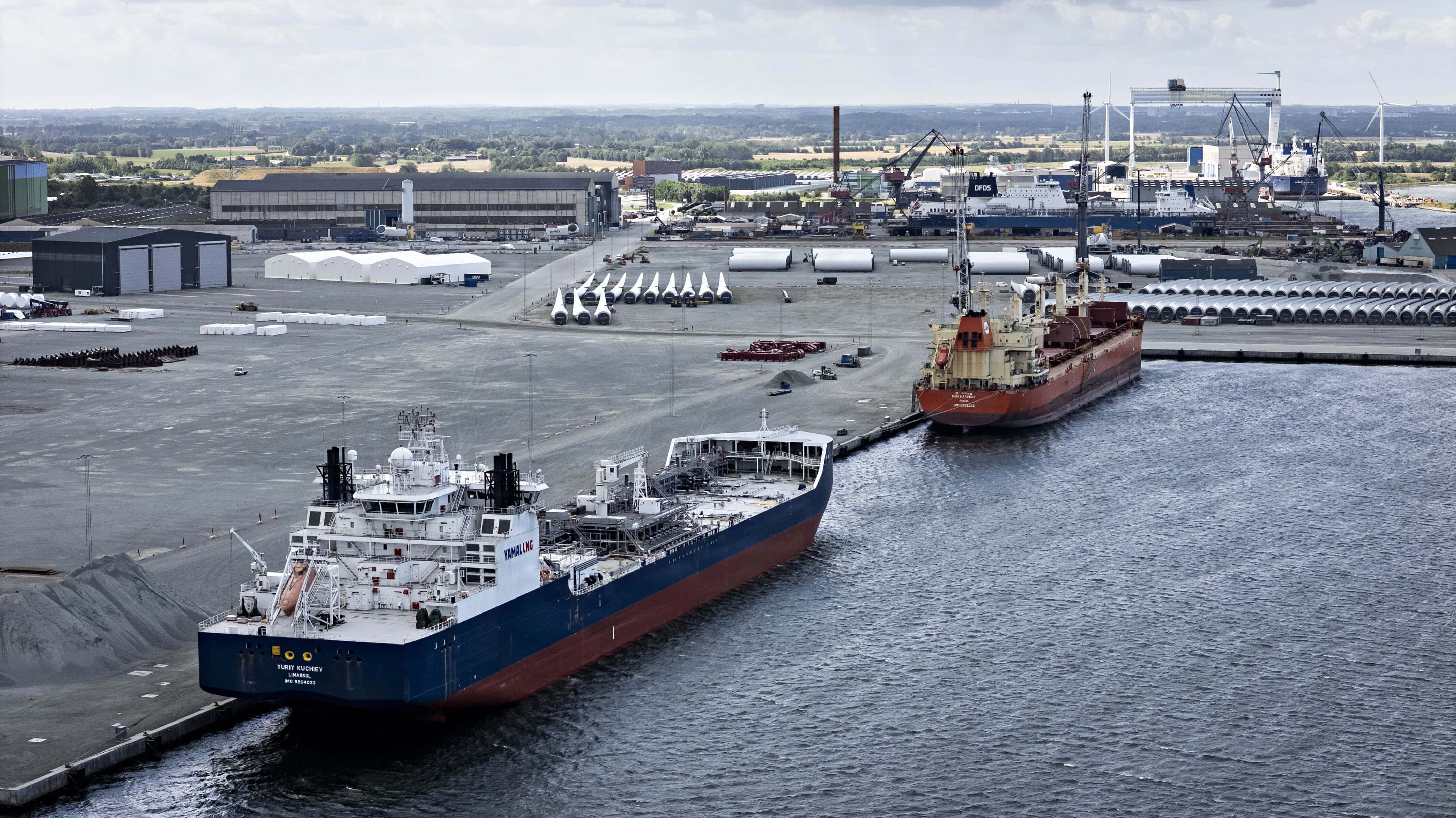
Last week, the 299-metre LNG tanker Nikolay Yevgenov set course for Denmark after unloading more than 70,000 tonnes of liquefied Russian gas (LNG) in Rotterdam.
At present, the ship is awaiting the green light from the Danish shipyard Fayard in Odense Fjord to enter dry dock to be prepared for new shipments of Russian LNG.
But that is not the ship’s only connection to Denmark.
Danwatch has reviewed the group’s accounts and ownership structure and can report that the ship is operated by a company in Singapore that is 100% owned by a Danish holding company: Seapeak Maritime Holdings (Denmark) A/S.
And according to a leading expert, the Danish holding company may run afoul of the EU’s new sanctions, which are tightening the grip on the Russian LNG business and the ships and services that keep exports running.
The sanctions are being introduced because LNG is a cash machine for Russia. According to the German NGO Urgewald, which closely tracks the ships, the EU alone bought LNG worth around €7.3 billion in the first eight months of the year—equivalent to about DKK 54 billion.
Jeff Nielsen, a lawyer specialising in international sanctions and export controls, assesses that a controlling owner — such as the Danish holding company in this case — has a responsibility to comply with the sanctions against Russia.
This applies even if it is done through a subsidiary in a non-EU country, such as Singapore.
“Under the so-called best efforts principle, EU companies must do what they can to ensure that companies outside the EU that they own or control do not undermine the sanctions,” says Jeff Nielsen.
Under the best efforts principle, EU companies must do what they can to ensure that companies outside the EU that they own do not undermine the sanctions


The company operates several shipping companies from the address Kalvebod Brygge 39 in Copenhagen. From here, CEO Jesper Bo Larsen has a view of Islands Brygge on the opposite quay of the harbour.
Neither he nor board member Svend-Aage Anthonsen has responded to Danwatch’s enquiries. When Danwatch stopped by Seapeak’s office, the door was locked, the lights were off, and the office was empty. There were no answers to be had there either.
The company is part of the global shipping group Seapeak, which in April this year moved the commercial responsibility for a total of six LNG vessels — built to transport gas from the Russian Yamal facility in northern Russia —from a subsidiary in Scotland to the Danish-owned company in Singapore called Seapeak Maritime (Singapore) Pte.
The transfer of the shipping business for the Russian cargo was carried out at the same time as the EU and the UK decided on new sanctions specifically targeting the transport and servicing of ships carrying LNG from Russia.
The sanctions include exemptions, however from January 2027 the import into the EU of Russian LNG under long-term contracts will be banned, while new restrictions will also hit ship servicing and the transport of Russian LNG.
Jeff Nielsen believes the Danish holding company must take stock of the new sanctions.
“My assessment is that the rules may also be relevant for a holding company in Denmark that owns or controls activities through a company in Singapore,” he says.

“We will have to restructure”
Seapeak has even warned its investors that both the EU’s and the UK’s sanctions are creating financial problems for the group in meeting existing gas delivery contracts.
“We expect that we will have to restructure our activities,” Seapeak writes in a recent financial statement to the US financial authorities about the upcoming sanctions.
From the turn of the year, new sanctions will affect both the purchase and transport of Russian LNG, and this may have consequences for the Seapeak group, which has itself stated that it will therefore restructure its Russian LNG activities.
Six LNG tankers
Operating the ship Nikolay Yevgenov, with its cargo full of Russian LNG, is not the only task now handled from Singapore, where Seapeak’s Danish holding company is the ultimate owner.
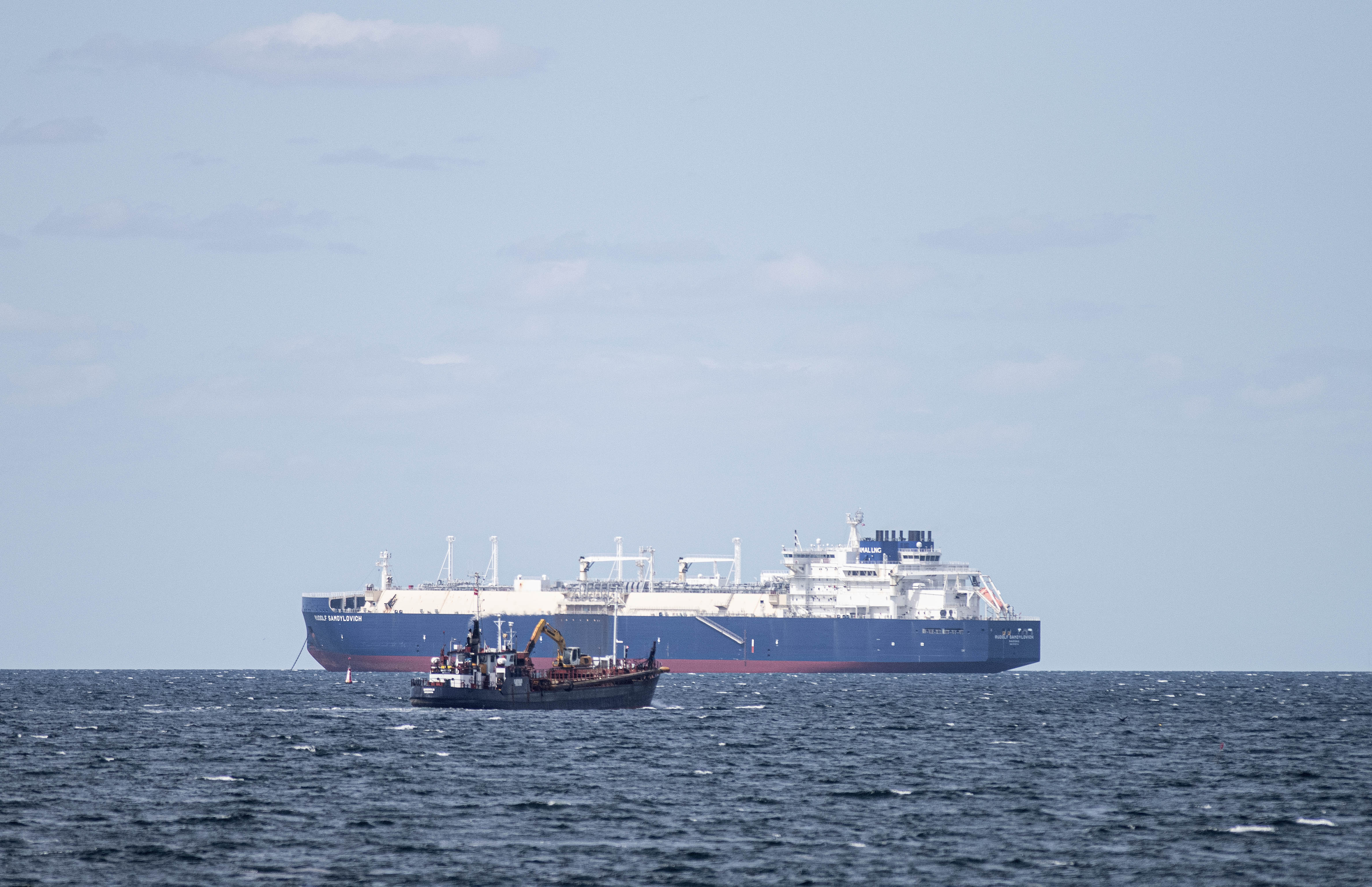
Through its subsidiary in Singapore, Seapeak controls the operation of a total of six tankers that are part of Russia’s war economy, enabling Vladimir Putin’s war against Ukraine.
The ships are called ARC7 vessels because they are built specifically to sail through Arctic ice and collect LNG from the Yamal facility in northern Russia year-round.
The facility is controversial because it is from here that the EU imports millions of tonnes of gas to secure its energy supply, while at the same time the EU sanctions Russia in other economic areas to weaken the country’s ability to wage war against Ukraine.
In addition, 20% of the Yamal facility is owned by the French energy company TotalEnergies, which counts several Danish pension funds among its shareholders.
Last year, TotalEnergies earned $400 million—equivalent to DKK 2.61 billion—from the sale of Russian gas from Yamal.
The Seapeak group, which both owns and operates the ships that can transport the gas from Yamal, is ultimately owned by the US investment firm Stonepeak.