Denmark’s Richest Man Invests in Luxury Safari that Prevents Locals from Farming Their Land

Denmark's richest man, Anders Holch Povlsen, is involved in ultra-luxurious safari tourism in northern Tanzania. Local residents explain how tourism prevents them from farming their land and cuts them off from water resources and ancestral graves. Danwatch and The Chanzo have been to western Serengeti.
Sarakwa in northern Tanzania calls itself a village. But it’s really not much more than a scattered collection of houses spread across a flat, desolate landscape. Between the houses, acacia trees and myrrh bushes sprout from the cracked earth, and only the narrow, brown footpaths reveal that the small squares of brick and mud constitute a small community.
About 200 inhabitants live in Sarakwa, and only one house in the village has electricity. The inhabitants live off the land. During the growing season they sow corn, rice, sorghum, cassava, millet and various vegetables, and at harvest time, they supply their own pantries and sell the surplus at various markets.
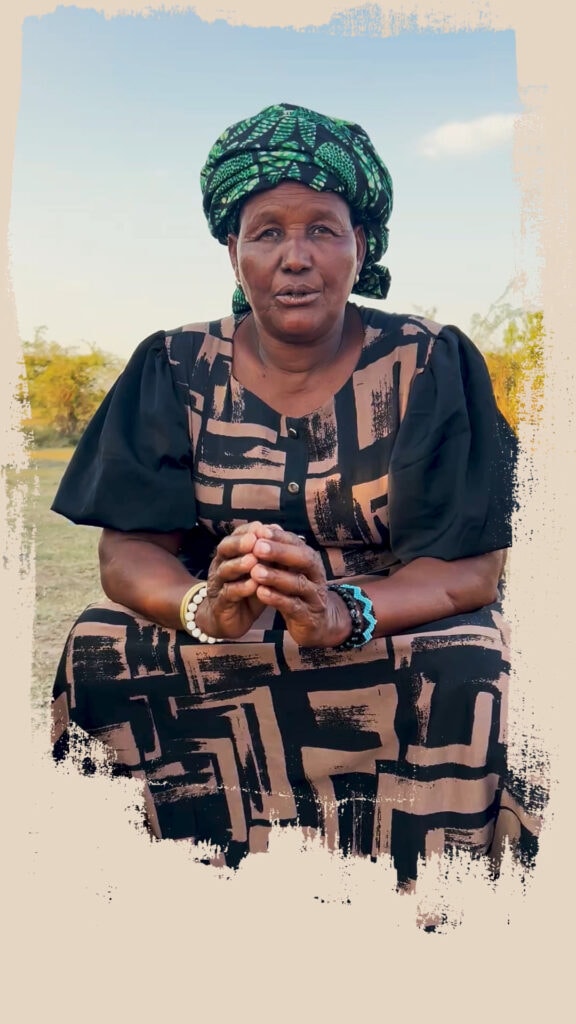
This is how the local economy has always worked. But it will hardly continue to do so much longer, explains Utugusa Samweli, a 56-year-old woman and mother of nine children who has lived in the area her entire life.
She has turned a plastic bucket upside down and sat down with Sarakwa’s green-brown terrain behind her. She is wearing a brown and black floor-length dress and has wrapped a scarf around her head. She smiles with her eyes but speaks with unmistakable seriousness.
“We have always been dependent on our land, but today it is almost useless,” she says.
In recent years, more and more residents of Sarakwa and the neighboring villages of Mariwanda, Park Nyigoti and Robanda have completely stopped farming the land. They have done so because of their neighbors: The Grumeti Game Reserve and the Ikorongo Game Reserve, where Denmark’s richest man, Anders Holch Povlsen, is co-owner of the rights to the land and invests in some of the world’s most expensive and luxurious safari hotels.
Tourists in the Grumeti and Ikorongo Game Reserves come to see the big five: lions, elephants, buffalo, rhinos and leopards. That is why both the Tanzanian government and the hotels make a massive effort to protect the animals – among other things by combating poaching. And with great success: 18 years ago, the Grumeti Game Reserve was home to 350 elephants. Today, the number is nearly 2,000. And since 2003, the number of buffalo has increased by no less than 1,000 percent.
The development may seem positive, but the increases have serious consequences for the nearby villages. Time and time again, they experience having their crops destroyed and their livestock killed by the same wild animals that a global elite of tourists pay large sums of money to see and photograph up close.
“Last year I had an entire rice field destroyed by a herd of elephants shortly after I had planted it. This year I have therefore not farmed my land at all. It’s no longer profitable,” says Utugusa Samweli.
Her story is not unique but is repeated in many places in the four villages along the Grumeti and Ikorongo Game Reserves that Danwatch and the Tanzanian media The Chanzo have visited in northern Tanzania.

Robanda
Sarakwa
Mariwanda
Park Nyigoti
Here residents also tell how the safari industry, which Bestseller billionaire Anders Holch Povlsen has poured money into, has deprived them of land and cut them off from water resources, firewood and ancestral graves of great spiritual significance.
According to Tekle Weldemichael, associate professor at the University of Manchester and PhD in land conflicts related to nature conservation in northern Tanzania, the pattern is well known.
“It looks like a classic example of how human rights violations are repeatedly committed in Tanzania in the name of nature conservation and tourism,” he says.
Won’t Answer Questions
And that’s what American hedge fund manager and multi-billionaire Paul Tudor Jones has done with the Grumeti and Ikorongo Game Reserves.
In 2002, he secured the right of use over the two areas as well as the adjacent Ikona Wildlife Management Area – a total of 1,376 square kilometers. And four years later, in 2006, he entered into a partnership with the South African safari company Singita, which has some of the market’s most lavish lodges in five different African countries. They now have seven hotels in the Grumeti Game Reserve.
According to the latest annual report from Anders Holch Povlsen’s holding company HEARTLAND A/S, the Danish billionaire owns 70 percent of Singita Management Holdings Pty Ltd and 33 percent of Singita Holdings (Mauritius) Pty Ltd, as well as 25 percent of Grumeti Community and Conservation LLC.
In an email to Danwatch and The Chanzo, HEARTLAND A/S confirms the investments. However, they refuse to provide further figures and merely write that they are “minority owners” in all the companies.
In an interview in 2020, Anders Holch Povlsen described his project in Tanzania as “one of the most important in Africa.”
“I have deep respect for the work and investments that my partner, Paul Tudor Jones, has made in recent years,” said the Danish billionaire.
His holding company has also declined to answer questions about local criticism of safari tourism in the Grumeti and Ikorongo Game Reserves. Instead, HEARTLAND refers to the Grumeti Fund, an independent foundation established by Paul Tudor Jones, which among other things is responsible for maintaining relations with nearby villages.
Houses Burned Down
Paul Tudor Jones’ leasing of the Grumeti and Ikorongo Game Reserves has been controversial from the beginning.
According to Navaya Ndaskoi, the reserves themselves constitute a human rights violation. He works for the Tanzanian organization PINGO’s Forum, which protects the rights of indigenous peoples, and has worked for many years to improve conditions for rural communities in northern Tanzania.
“The Grumeti and Ikorongo Game Reserves have been a source of conflict between the government and neighboring villages from the beginning,” he states.
His point is backed up by a research article published by researchers at Osgoode Hall Law School in Toronto, Canada, and the organization Legal and Human Rights Center in Tanzania. It describes how the residents of the village of Nyamuma on the border of the Ikorongo Game Reserve were evicted twice before Paul Tudor Jones moved into the area in 2002.
In October 2001, the district commissioner used a megaphone to order the villagers to move within four days. Two days after the deadline, the village’s houses were set on fire, their cattle were killed, and several residents were subjected to violence. In total, 132 families lost their homes. None of them were offered new land or other form of compensation.
Paul Tudor Jones has previously stated that he was not involved in the clearing of Nyamuma, but Danwatch and The Chanzo’s research shows that the conflict between the Ikorongo and Grumeti Game Reserves and the local population continues.
“Throughout all the years, we at PINGO’s Forum have continuously received reports of everything from destroyed crops to confiscated cattle and blocking of water supplies,” says Navaya Ndaskoi.
Struggle for Scarce Resources
The village of Robanda is divided in two by a main road lined with small shops, bars and restaurants on either side. On the solid red earth, four-wheel drive vehicles with international safari guests speed past, while locals go about their daily lives, oblivious to the traffic.
At the local barber shop, a Maasai – dressed in the traditional Maasai shuka – asks if he can borrow a charger for his phone, and on the opposite side of the road two hungry truck drivers wait to be served mbuzi choma, grilled goat meat, at a small tavern under a corrugated tin roof.
Robanda is sandwiched between two of the world’s most sought-after safari areas. To the east, Serengeti National Park’s vast savanna opens up, and to the west are the green expanses of the Grumeti and Ikorongo Game Reserves.
In this part of Tanzania, people have been accustomed to living side by side with elephants, lions, hyenas, wildebeest, zebras and other wild animals for centuries.
But in recent years, conditions have changed. The authorities and safari companies have been so successful in combating poaching that wild animal populations have skyrocketed, creating major conflicts over food, water and land, which are already scarce resources in this part of Tanzania, according to ten sources in or near four villages close to the border of the Grumeti and Ikorongo Game Reserves, which Danwatch and The Chanzo have visited.
One of them is Samson Kishimba, a round-faced man in his 50s. He lives in Robanda and had worked as a farmer his entire life when in 2023 he decided to change his life and drive a boda boda, a motorcycle taxi.
“In the end, I wasn’t growing food for myself and my family, but only for the elephants. I couldn’t afford to keep doing that,” he says.
He is not inherently against safari tourism in the area. It generates some economic activity that the local population can also benefit from. He also understands that poaching must be combated. However, he feels that justice is lacking.
Right now, he believes tourism takes more than it gives.
Lives on Dried Grass
Nyakaho Chabola is an example of this. She also lives in Robanda, a few hundred meters from the main road down a footpath surrounded by thorny bushes and herds of goats. Here she has a small plot of land with a couple of mud huts and a main house of raw concrete. Between them, large, green papayas dangle from narrow trees.
Nyakaho Chabola is 50 years old, has four children, and, like Samson, she used to run a small farm. But like so many other small farmers in the area, she has had to change her life due to attacks from animals in the Grumeti and Ikorongo Game Reserves.
Until two years ago she had a small field of corn and millet next to her house. She gets up from a plastic chair under one of the papaya trees and points to an overgrown patch of grass. She still has her goats and cows, but fewer than she used to.
“The wild animals from the reserves, especially hyenas and lions, attack our livestock. I myself have lost goats and cows,” says Nyakaho Chabola.
The changes have had major consequences for the family. It was the small farm that put food on the table and provided money to send the children to school. Now Nyakaho Chabola makes a living by selling bundles of dried grass, which she collects in the bush and leaves to dry in the scorching sun on top of the roofs of her mud huts.
She charges 100 Tanzanian shillings for one bundle. That equals 26 Danish øre.
“It’s hard work,” she says.
Jens Friis Lund, professor of political ecology at the University of Copenhagen, has studied similar problems in villages near Tarangire National Park, also in Tanzania.
And he notes one thing in particular about Nyakaho Chabola’s story.
“I have spoken with many farmers myself who have changed their crops in an attempt to keep the elephants away. But I have actually never heard of anyone who has completely given up farming their land. That says something about how serious this problem is,” he says.
In 2014-15, Jens Friis Lund participated in a study of 42 villages in Tanzania to estimate the financial costs of crop destruction by wild animals. 1,924 households participated in the study, which showed that in the past year they had experienced damages of just over $300,000 (nearly two million kroner). Adjusted for inflation, this corresponds to approximately $410,000 (2.6 million kroner) in today’s economy.
It’s a large amount in this context and shows that there’s more at stake than just agricultural land. Such significant economic losses are bound to have a series of derivative effects for those affected. When they lose their livelihood, their children risk being pulled out of school, for example, or it becomes harder to afford medicine,” he says.
Deep Compassion
In 2016, a Tanzanian researcher conducted a survey among the villages neighboring the wildlife reserves. Here, 86.4 percent responded that they had experienced destruction of their property, including agricultural land, while 68.9 percent of those surveyed had difficulty getting water for their cattle because the reserves prevented them from accessing several nearby rivers.
In an email to Danwatch and The Chanzo, the Grumeti Fund, which manages the relationship with the neighboring communities, writes that “challenges” such as “destruction of agricultural land, loss of cattle, and land conflicts” are unavoidable, and that they are doing what they can to address them in cooperation with the Tanzanian government.
“We feel deep compassion for the people in the neighboring villages who experience difficulties as a result of conflicts between humans and wild animals. This understanding is a key driver behind the design and implementation of our community and nature conservation programs,” writes the Grumeti Fund.
The Grumeti Fund also believes that it is making a great effort to invest in the neighboring villages. Together with the Tanzanian government and local stakeholders, it has launched initiatives that support education, job creation, and sustainability, among other things.
“Over the past 20 years, we have strived to be a responsible partner and the best possible neighbor, with the goal of meaningfully expanding economic opportunities and improving educational opportunities for villagers, while protecting agricultural land from wild animals and generating significant income from tourism for local communities,” they write.
The Grumeti Fund states that annually it awards 80 educational scholarships, provides educational support to 26 schools, and offers small local businesses “critical capital.”
The Tanzania Wildlife Management Authority (TAWA), which is the responsible authority for the Ikorongo and Grumeti Game Reserves, has not responded to Danwatch and The Chanzo’s inquiry before the deadline, while Singita refers to Grumeti Fund’s response.
Forbidden Land
Driving west out of Robanda, along the Grumeti and Ikorongo Game Reserves, the roads are so uneven that cars are bounced from side to side. In some places you can see the remains of old asphalt, but otherwise the surface is just gravel and stones, typically distributed in narrow deep furrows created during the last rainy season. The furrows give the feeling that you’re driving over one long grate.
Park Nyigoti is the name of the first town you reach after Robanda. This is where Mtiro Gekora grew up. Until 2024, he was also village chairman.
From his plastic chair in the cool shade of a tree, he points to a grass-covered hill a few hundred meters out on the horizon. That’s where the Ikorongo Game Reserve begins, and that’s where the residents of Park Nyigoti have no access, he explains. If they or their cattle cross into the game reserve, they risk large fines as well as having their cattle confiscated and auctioned off.
Mtiro Gekora acknowledges and appreciates Grumeti Fund’s investments in the local school, but he doesn’t think safari tourism’s social initiatives outweigh the costs that the establishment of the Grumeti and Ikorongo Game Reserves has had on Park Nyigoti.
“These are small investments compared to the consequences we live with every day,” he says.
Like the residents of Sarakwa and Robanda, the people of Park Nyigoti are also experiencing how safari tourism has boosted wildlife populations resulting in destroyed crops and property. But that’s not all.
Mtiro Gekora points to another green mound in the landscape.
“Our ancestors – my grandparents – are buried out there. The land means a lot to us, but the graves now lie within the boundaries of the Ikorongo Game Reserve. We believe it’s our land, but we don’t have access to it,” he laments.
If the people of Park Nyigoti want to visit their ancestral graves, they must request permission from TAWA. The authority has not responded to Danwatch and The Chanzo’s inquiry, but in an email, the Grumeti Fund writes that it is their understanding that residents must apply for permission to TAWA for their own safety, so they can be escorted in without being attacked by wild animals.
Park Nyigoti has a similar problem with their access to water and firewood, Mtiro Gekora continues.
“Where is the place where we used to get water for ourselves and our cattle, and where we used to get firewood? Inside the Ikorongo Game Reserve. We no longer have access to that either,” he says.
The official boundaries of the Ikorongo Game Reserve have not changed since the area was declared a game reserve in 1994, but according to Mtiro Gekora, Park Nyigoti was cut off from the Manchira River in 2014. And the village is not the only one near the Grumeti and Ikorongo Game Reserves that believes it has lost access to water supplies. The same goes for the inhabitants of the villages of Bonchugu and Nyamatoke, according to the aforementioned study.
In an email, the Grumeti Fund denies that Park Nyigoti or other villages have lost access to water resources.
“The Manchira River originates from and flows through communal land where local population has access to it,” the fund writes.
They do not elaborate on where they believe local population has access to the river.

The Dream of the Untouched
Tanzania’s economy is deeply dependent on international tourism. The industry accounts for 17 percent of the country’s GDP and has recently overtaken gold as Tanzania’s primary source of foreign currency.
Therefore, the Tanzanian government is doing everything it can to provide tourists with what they want, says Jevgeniy Bluwstein, associate professor in social anthropology at the Universität Bern, where he has spent several years researching nature conservation and land conflicts in northern Tanzania.
“Tourists dream of seeing Africa’s untouched nature, but it doesn’t exist, because the nature that we in the West imagine to be untouched has been home to people for centuries. So how do you give tourists what they want? You create it, and you can only do that by pushing people away or outright displacing them. In this way, there is a fundamental conflict between the safari industry and the local population,” he says.
In recent years, the Tanzanian government has received widespread international criticism for its treatment of the Maasai people in Ngorongoro and Loliondo, two other major safari destinations in the country. Here, according to a large number of organizations and experts, the government has committed serious abuses against innocent civilians in order to please tourists.
Therefore, it should also not come as a surprise to private investors like Anders Holch Povlsen that investments in safari tourism in Tanzania are at great risk of leading to worsened living standards for the local population.
“In that case, it is because they have not familiarized themselves well enough with the issues or have not listened to people who understand this type of conflict. If they had done their homework, they would know that safari tourism in Tanzania is closely linked to systematic human rights violations,” says Jens Friis Lund, professor at the University of Copenhagen.
Wants fences to be put up
In the villages around the Ikorongo and Grumeti Game Reserves, many of the inhabitants feel that they are fighting a losing battle. They know very well that the government does not care much about their concerns but will instead go to great lengths to accommodate international investors who want to do business in tourism in Tanzania.
In Sarakwa, however, Utugusa Samweli has not given up hope of being able to start farming her land again. But it requires action to be taken, she says. She is therefore calling for a fence to be erected that can keep the wild animals away from the surrounding villages.
Otherwise, the problems will continue as they are now with fewer and fewer families being able to feed themselves, she says, pointing to a brown pile three-four meters in front of her house. From a distance, it just looks like a random collection of turf or some withered leaves, but it is dried elephant dung that was left on her property a few days earlier.
“You see,” she says.
Heri Dumi Manzimoto, a 70-year-old man from the village of Mariwanda on the border of the Grumeti Game Reserve, has the same message.
“All my life, elephants have not been something we encountered regularly. Now even an unborn child can hear the elephants from inside its mother’s womb. If we are to continue to be able to farm our land, a fence needs to be put up,” he says.
The Grumeti Fund is no stranger to the idea of a fence. In 2020, they put up a 33-kilometer-long electric fence at the Ikorongo Game Reserve, and according to the fund, the results have been positive. The fund is currently exploring the possibilities of extending the fence but writes in an email to Danwatch and The Chanzo that it is both “complex” and “time-consuming” to implement.
Meanwhile, Utugusa Samweli and the other residents of Sarakwa are trying to make ends meet. Life out here in the northern Tanzanian wilderness has never been easy, but it has become even more difficult after the village’s backyard has become one of the world’s most attractive safari destinations.
Utugusa Samweli now makes a living by selling milk from her cattle. It is enough to get by, but only just, and she is constantly afraid that her animals will suffer the same fate as her land. If that happens, she has no idea what to do.
Her conclusion is clear:
“The lives of the elephants are apparently more important than ours,” she says.