Opens in a new tab
Construction and Infrastructure26/06/2025

Documents reveal massive upgrades to Russian nuclear warheads storage facility

A cache of Russian military documents reveal extensive modernization at secretive nuclear warhead storage and missile payload handling facility. The documents also show several links to Danish and European companies.
BB
Illustration: Louise Kock
Danwatch er et undersøgende medie. Vi afslører, hvordan danske virksomheder og andre magtfulde aktører påvirker mennesker, miljø og klima i verden. Vi dokumenterer brud på love, konventioner og etiske retningslinjer og viser konsekvenserne.

This article is a part of the investigation The Nuclear Files

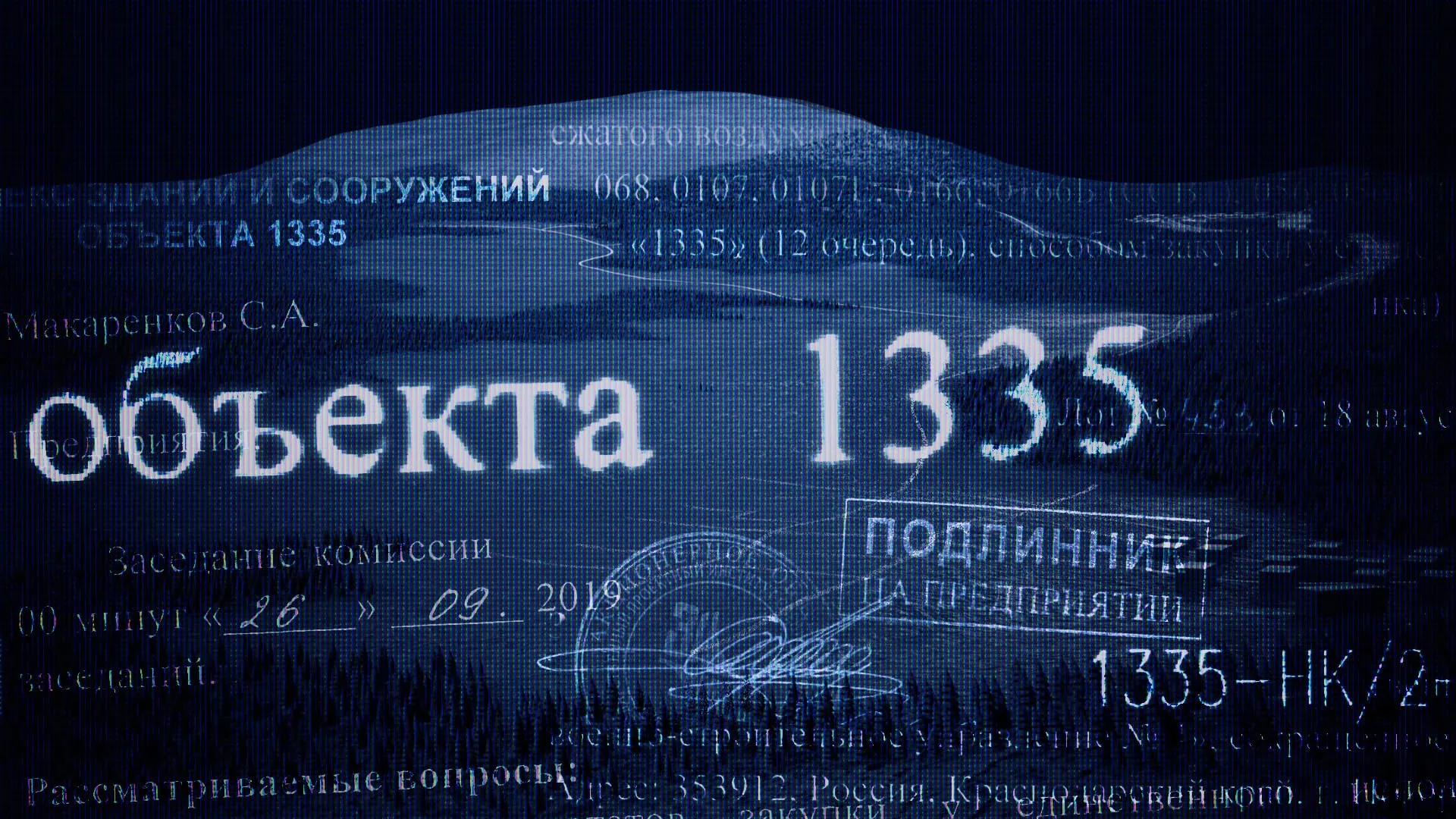
  • Through systematic research in open-source databases, Danwatch has collected more than two million documents linked to Russian military procurement.
  • The trove of documents contains hundreds of original blueprints detailing the layout of several Strategic Missile Forces bases across Russia.
    Among the documents are hundreds of original floor plans of Strategic Missile Forces bases across Russia.
  • It offers unprecedented insight into President Putin’s massive modernization of some of the world’s most highly secured nuclear weapons facilities — a process in which several Western companies turns out to have played a key role.

If you have a tip about Danish or European companies in Russia, we would love to hear from you.

A very satisfied Vladimir Putin presented Russia’s progress in the modernization of its nuclear weapons program on 11 June in the Kremlin. According to the president, virtually all of the old nuclear weapons systems from the Soviet era have now been replaced with new ones.

“Currently, the share of modern weapons and technology in the strategic nuclear forces already makes up 95 percent. This good indicator, in fact, it is the highest indicator of all nuclear powers of the world,” he said.

And these are not just empty words from Putin.

Danwatch has systematically collected more than two million documents from Russian military procurement, revealing a massive upgrade of the military infrastructure at Russia’s most protected nuclear weapons facilities.

In addition to tender documents, the files also contain hundreds of highly sensitive original blueprints of bases belonging to Russia’s nuclear forces. The fact that these documents have been freely available on the Internet is considered to be a major security breach on the Russian side by several experts.

Recently, Danwatch, in collaboration with Germany’s Der Spiegel, uncovered previously unknown blueprints and military tender documents revealing how Russia has undertaken a massive modernization of the Strategic Missile Forces’ bases near the city of Yasny.

It was also documented that products from Danfoss, Grundfos and Rockwool, as well as companies from many other European countries, had been used in the upgrade of the bases, which at the time were being prepared to be equipped with Avangard – one of Russia’s newest nuclear weapons delivery systems.

Now Danwatch can reveal that the central technical base in Yasny, where the missile forces store the nuclear warheads in underground bunkers and where the missiles themselves are handled, has also been extensively upgraded.

Before 6 2009
2009
After 9 2024
2024
Satellite photos clearly show how the technical base near Yasny has been expanded and modernized. The thousands of military tender documents from the process reveal that the work was carried out in several stages, primarily in the years 2013-2016 and 2019-2021. Photos: Google Earth / Maxar Technologies 2025 / Airbus 2025.

Like “gold dust” to foreign adversaries

According to the extensive material, the base has been expanded and modernized several times since 2013. The area of the base has been expanded by almost 50 percent and is now equivalent to approximately 250 soccer fields, numerous new buildings have been erected, and extensive security systems and checkpoints have been installed on the base.

For the first time, Danwatch is now able to use detailed blueprints to look inside at least nine of the new buildings to determine what the buildings are used for and see in great detail how they are constructed. These include guardhouses, technical checkpoints and storage facilities for military equipment.

The blueprints also reveal more sensitive buildings, including a large assembly hall located in the area of the base where nuclear missiles are assembled and prepared before launch. The drawings show in great detail the layout of the hall and what materials are used.

According to Philip Ingram, a former military intelligence officer with more than 25 years’ experience in the British Army, the fact that these plans have been on the internet is further proof that the Russian authorities have been lax in the security of the highly sensitive nuclear weapons bases.

“This type of information is gold dust and can be compared to current satellite imagery to give a very current understanding of potential military targets,” he says.

“Understanding what buildings do or what they store is critical to modern military operations. It allows surgical attacks to have maximum impact, thereby reducing the risk to attacking forces and reducing collateral damage ,” he says.

Blueprints combined
A large number of original blueprints for the new buildings at the nuclear weapons base show the structure of the base in great detail. Here you can see a small detail of the many kilometers of fencing surrounding the base, as well as a detail of one of the buildings. The drawings also mention several European and Danish companies specifically by name.

The products sold to the technical base in Yasny are most likely manufactured by Danfoss, Grundfos and Rockwool subsidiaries inside Russia.

This means that they are subject to Russian law and are therefore generally not covered by the EU sanctions imposed in 2014 following Russia’s invasion and annexation of the Crimean peninsula – and which were subsequently tightened following Russia’s attack on Ukraine in 2022.

Mark Taylor, an expert in international law for companies operating in conflict zones, has previously told Danwatch that the Danish authorities should investigate the companies’ responsibility in the case.

“These products are not just sold to the Russian military, which is serious enough in itself, but to bases with weapons of mass destruction. This is clearly an aggravating circumstance because the use of nuclear weapons is strictly regulated under international law,” he says.

Today, Danfoss and Grundfos have withdrawn from the Russian market, while Rockwool still owns four factories inside Russia.

Danish products

The tender documents also state that from 2013 to 2016 alone during the first phase of reconstruction, over 500 tons of rebar, 2,100 tons of cement and over 150 kilometers of cables were used to modernize the technical base. Explosion-proof equipment was also installed in several of the buildings.

In addition to several large Western companies from Germany, France, Italy, the Netherlands and Switzerland, products from Danish companies Rockwool, Danfoss and Grundfos have also been specifically requested and used.

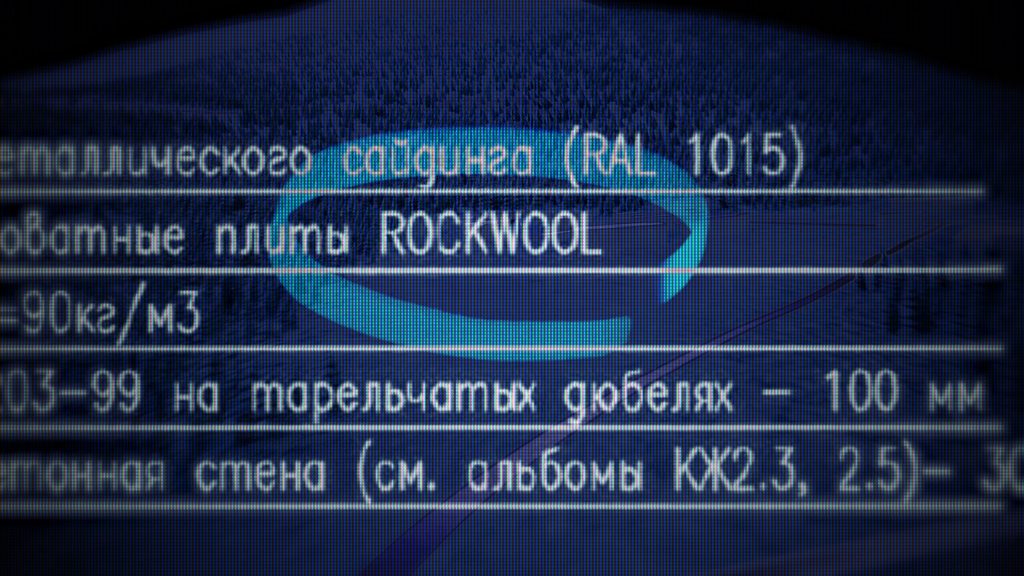
The blueprints show that specific Rockwool products are written into the original drawings of at least five of the new buildings on the base. In some cases, contact details for Rockwool’s offices in Russia are also written in.

In total, Danwatch can document that at least 438 Danfoss components, 4 Grundfos pumps, and Rockwool ceiling and wall insulation products as well as almost 1 kilometer of pipe insulation were delivered. According to the documents, the products were used in several of the new buildings on the base, including the assembly hall, which currently contain products from Rockwool and Danfoss.

The Danish products have been requested by the Russian Ministry of Defense and delivered by Russian intermediaries in the years 2019-2020.

METHODOLOGY

How we connected the Avangard weapon system to the facility

According to the Russian Ministry of Defense and several of the world’s leading researchers monitoring the world’s nuclear forces, two regiments at Yasny have since 2019 been equipped with Avangard – one of Putin’s newest nuclear weapons delivery systems.

By analyzing several videos showing Avangard test launches published by Russia’s Ministry of Defense, we can confirm that the missiles and the Avangard system are indeed housed inside the technical base. In the videos, a missile is rolled out of a building and then heads towards a missile silo a few kilometers away.

Although great care has been taken to film very closely and not reveal too much detail in the videos, there are still some sequences that contain clues. By comparing visual markers such as buildings, trees, masts and roads with satellite images of the area, it is possible to see exactly which route the vehicles in the video are taking and from which specific building the missile is brought out from.

This allows us to place the missile, which according to Russia itself is equipped with the Avangard system and which will be lowered into a missile silo and fired shortly afterwards, on the technical base. The silo itself can also be geolocated in the same way.

Click on the images below to see them in full size.

Source: Russian Ministry of Defense (Youtube), Google Earth / Maxar Technologies, colored shapes added by Danwatch

Denies any knowledge of deliveries

Danwatch has asked Danfoss, Rockwool and Grundfos about the deliveries to the technical base in Yasny. Rockwool and Grundfos refer to the answers they have previously given regarding the deliveries to the regiments’ bases and missile silos, while Danfoss has not responded to our inquiry.

From Rockwool’s headquarters in Hedehusene, Denmark, it was previously stated that Rockwool in Russia does not sell directly to Russian end users and therefore has no customer relationship with the Russian military, the Russian government, or other Russian public entities.

“Our products are widely available in both the Russian and Ukrainian markets through distributors. Therefore, it is also impossible for us to know or have any control over who all the end users in the Russian market are.”

Danfoss’ Head of Communications, Kasper Elbjørn, previously responded in an email:

“Danfoss no longer sells products on the Russian market and we have no contact with our former colleagues or former distributors.”

“I can’t deny that back in 2019 we sold, for example, thermostats or valves for water through various distributors,” he wrote, adding:

“We cannot help you further, but perhaps you should know that the valves our distributors sold are used to secure hot water in buildings and are hardly essential for the modernization you write about, which we therefore do not know about.”

Grundfos emphasized that the company has sold the Russian business in 2022 and therefore no longer has access to the Russian company’s archives and data.

“Jeres spørgsmål vedrører perioden fra 2017-2020. Derfor kan vi hverken af- eller bekræfte, om vores produkter, via lokale distributører, er tilbudt til eller solgt til modernisering af basen i Yasny. Men vi kan som jer se, at de har fremgået som referenceprodukter i udbudsmaterialet”, skrev Grundfos og uddybede:

“If you look at the list of products that according to your information were sold to the Yasny base, they were not covered by sanctions at the time. Nor were they developed for military purposes. These were basic water solutions for buildings. They are standard products that are normally sold for stock at retailers, which is why we normally have no knowledge of who the end users are.”

Danwatch has asked the Russian Ministry of Defense whether it has been in dialogue with Danish companies regarding the products used at the technical base in Yasny. We have also presented experts’ assessment that there is a major security breach in that Danwatch has been able to find the blueprints of sensitive nuclear weapons bases online.

However, they have not responded to our inquiry.
  • Blueprints, tenders, and contracts show that Danfoss has played an important part in modernizing the infrastructure of these bases. What is your comment to that?
  • Was Danfoss aware that your products have been used in the modernization of infrastructure and buildings inside Russian nuclear weapons bases?
  • What does Danfoss think about the fact that its products have been specifically requested by the Russian Ministry of Defense’s Main Directorate for Special Military Construction Projects – and subsequently delivered and used for this purpose?
  • Our research shows that Danfoss was included in the original blueprints for the modernization of the nuclear weapon bases in Yasny as far back as 2009, and that contact information for Danfoss’ Russian companies is also included in these blueprints. It also appears that the products on these blueprints have been selected on the basis of a military bidding process and that it is not permitted to use other similar products with the same properties. Has Danfoss been in dialog with the Russian authorities in connection with the selection of your products, or otherwise participated in such a bidding process?
  • During the period in question, did Danfoss have a policy that the company’s products must not be used in connection with weapons of mass destruction? And has this policy been communicated to Russian distributors and business partners?
  • In 2015, Danfoss participated in Russia’s largest military exhibition Army-2015 organized by the ministry.
  • Why did Danfoss participate in this fair? And how much of Danfoss’ revenue in Russia comes from the defense industry/Ministry of Defense?
  • Were all Danfoss products sold on the Russian market produced at Danfoss factories in Russia at the time?

Danwatch and Der Spiegel asked Rockwool the following questions:

  1. Blueprints, tenders and contracts show that Rockwool has played an important part in modernizing the infrastructure of these bases. What is your comment to this?
  2. Was Rockwool aware that Rockwool products have been used for the modernization of infrastructure and buildings inside Russian nuclear weapons bases?
  3. Our research shows that as far back as 2009, Rockwool was included in the blueprints for the modernization of the nuclear weapons bases in Yasny, and that the contact details of Rockwool’s Russian companies were also included in these blueprints. It also appears that the products on these blueprints were selected on the basis of a military bidding process and that it is not permitted to use other similar products with the same properties. Has Rockwool been in dialogue with the Russian authorities in connection with the selection of your products, or otherwise participated in such a bidding process?
  1. How does Rockwool feel about the fact that its products have been specifically requested by the Russian Ministry of Defense’s Main Directorate for Special Military Construction Projects – and subsequently delivered and used for this purpose?
  1. During the period in question, did Rockwool have a policy that the company’s products must not be used in connection with weapons of mass destruction? And has this policy been communicated to Russian distributors and business partners?
  2. In at least three cases, Rockwool products have been requested and delivered to the bases after the war in Ukraine started in February 2022. What is your comment to this?
  3. Rockwool has retained ownership of factories in Russia. Does Rockwool have any policies on whether your products on the Russian market, produced by your Russian subsidiaries, can be used for military purposes?

Below is Rockwool’s full response:

  • ROCKWOOL in Russia does not sell directly to Russian end users and therefore has no customer relationship with the Russian military, the Russian government or other public entities.
  • In Europe alone, we distribute more than 120 million packages of stone wool per year, all through a wide network of distributors. We have the same business model in Russia.
  • Our products are widely available in both the Russian and Ukrainian markets through distributors. Therefore, it is also impossible for us to know or have any control over who all the end users in the Russian market are.

In relation to our 4 Russian factories, we can comment:

  • When Russia attacked Ukraine in February 2022, ROCKWOOL had four active factories in Russia. The four factories have since put us in a dilemma that offers no good solutions – only the task of finding the least bad.
  • We still own the factories, but have separated them from the rest of the ROCKWOOL business and have nothing to do with the daily management of the factories. The factories are completely self-sufficient, they neither import nor export raw materials or products to or from other ROCKWOOL companies. It’s a closed loop, but it also means that they could easily be taken over and continue operating, with or without ROCKWOOL. That’s why we don’t get rid of them.
  • We feel this way: We cannot convince ourselves that it is a good idea to give ROCKWOOL’s Russian turnover and business to the Russian state or an oligarch.
  • Is it the perfect solution? No, but we think it’s the least bad.
  • Can you disagree with the decision and criticize it? Yes, we understand that you can. But as I said, that’s the dilemma we’re faced with.

Danwatch and Der Spiegel have asked Grundfos the following questions:

  1. Blueprints, tenders and contracts show that Grundfos has played an important part in modernizing the infrastructure of these bases. What is your comment to that?
  2. Was Grundfos aware that Grundfos products have been used in the modernization of infrastructure and buildings inside Russian nuclear weapons bases?
  3. In our research, we have seen strong indications that Grundfos was included in the original blueprints for the modernization of the nuclear weapon bases in Yasny as far back as 2009. Has Grundfos been in dialog with the Russian authorities in connection with the selection of your products, or otherwise participated in such a bidding process?
  1. How does Grundfos feel about the fact that its products have been specifically requested by the Russian Ministry of Defense’s Main Directorate for Special Military Construction Projects – and subsequently delivered and used for this purpose?
  1. During the period in question, did Grundfos have a policy that the company’s products must not be used in connection with weapons of mass destruction? And has this policy been communicated to Russian distributors and business partners?
  2. Were all sales of Grundfos products in the Russian market produced at Grundfos factories in Russia at the time?
  3. Documents from the Russian Ministry of Defense show that in 2017 Grundfos participated as an exhibitor at Russia’s largest military exhibition Army-2017 organized by the Ministry of Defense. Facebook posts (see attached) also show that Grundfos gave a presentation at the fair. Why did Grundfos participate in this fair? And how much of Grundfos’ revenue in Russia comes from the defense industry/Ministry of Defense?

Below is the full Grundfos response:

Immediately after Russia’s invasion of Ukraine in 2022, Grundfos initiated a sale of the Russian business. That divestment was finally approved by the Russian authorities and completed in 2024. In the intervening time, specifically since March 2, 2022, Grundfos has not conducted business in Russia and we no longer have access to the Russian company’s archives and data.

Your questions concern the period from 2017-2020. Therefore, we can neither confirm nor deny whether our products, via local distributors, have been offered or sold for the modernization of the base in Yasny. However, like you, we can see that they have been listed as reference products in the tender documents.

If you look at the list of products that according to your information were sold to the Yasny base, they were not covered by sanctions at the time. Nor were they developed for military purposes. These were basic water solutions for buildings. They are standard products that are normally sold for stock at retailers, which is why we normally have no knowledge of who the end users are.

In addition, we can inform you that Grundfos products must not and cannot be used where nuclear standards are required.

Finally, it is important for us to emphasize that we have always had a comprehensive export control compliance program. Among other things, our current program helps ensure that our products do not end up in Russia.

Fra samme undersøgelse

Gå ikke glip af den næste afsløring.
Få vores nyhedsbrev

Få ugens historier fra Danwatch direkte i din indbakke hver søndag.

Nedenfor kan du tilvælge vores månedlige tematiske nyhedsbreve.

Uanset hvor mange, du vælger, skriver vi højst til dig tre gange om ugen.