

Part of an investigation
This article is a part of the investigation Russia’s European Money Machine
- Russian oil, gas, steel and other raw materials are a central part of the country’s economy and contribute to the revenues that keep the war economy running.
- Despite extensive sanctions, Europe still plays an important role in the value chain that generates Russian export revenues. This happens through shipping, financing, services and corporate structures with links to European countries, including Denmark.
- Danwatch is investigating how Western companies form part of Russia’s economic circuit, which Danish and European links can be documented, and who keeps Russia’s money machine running—and profits from it.
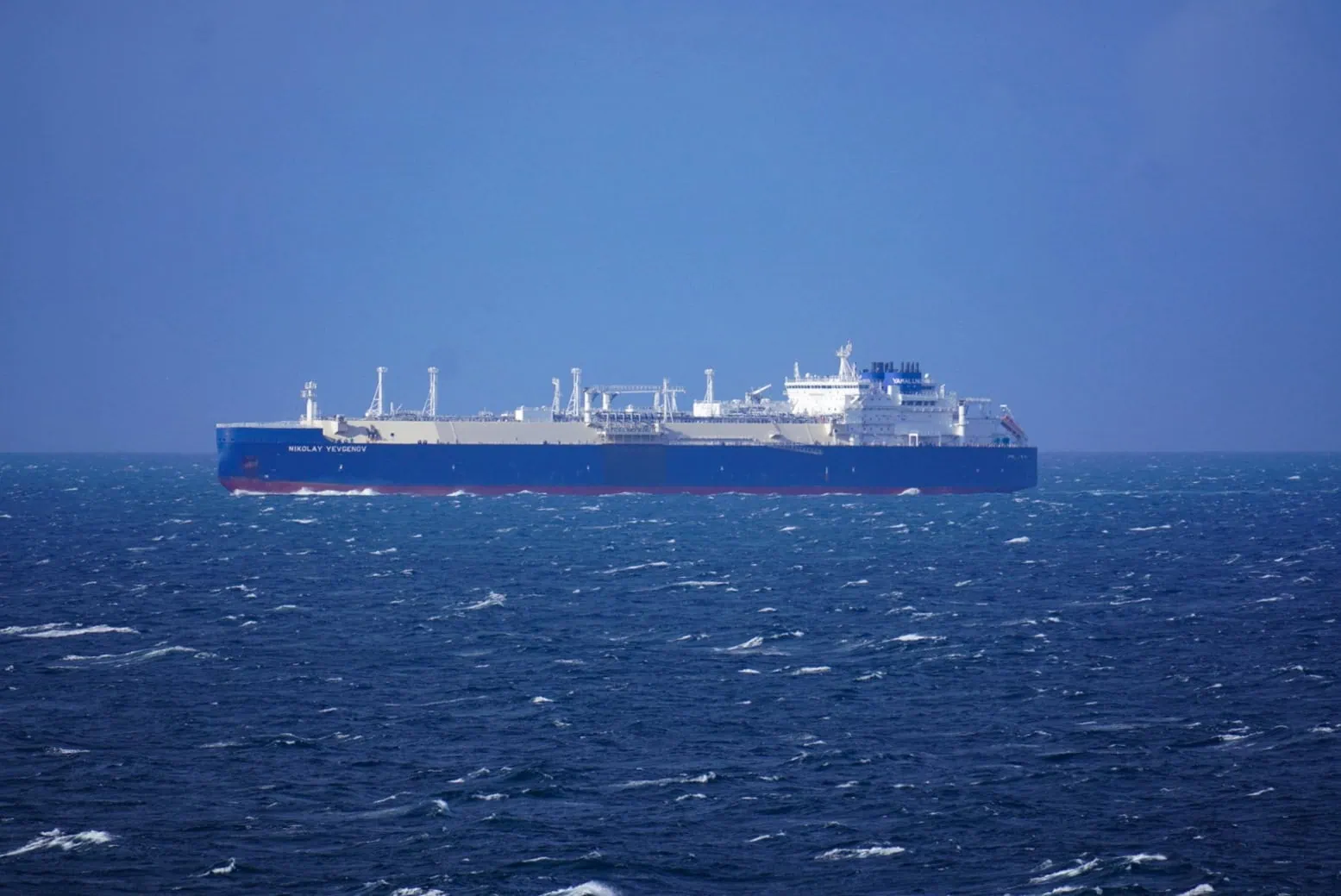
Six specially built icebreaking tankers operated from a company in Copenhagen have, since April, cut through Arctic ice and carried Russian liquefied natural gas (LNG) worth around $1.5 billion.
This is shown by a calculation the German NGO and campaign organisation Urgewald has produced for Danwatch, after we revealed the link between Russian gas transport and a Danish holding company registered at Kalvebod Brygge 39.
The market value of the gas, which is often unloaded in European ports, is supported by data from MarineTraffic provided to Danwatch. Since April, the six tankers have shipped almost one fifth of all the LNG Russia exported in the period from April to September.
This brings to light that the Danish company Seapeak Maritime Holdings (Denmark) makes a major contribution to Russia’s billion-dollar energy revenues, which help finance the war against Ukraine.
The Danish link to Russia’s billion-kroner revenues was established in the spring, when the global shipping giant Seapeak moved the operation of the ships from a company in Scotland (UK) to a company in Singapore with Danish ownership.
The Danish-owned Singapore company’s role as so-called commercial manager includes keeping track of the ships’ cargo and coordinating with ports when the gas is to be unloaded.

Danwatch has presented the information to the international think tank Centre for Research on Energy and Clean Air (CREA), which maps energy markets.
They conclude that the tankers contribute substantially to Russia’s gas revenues.
“Seapeak’s six tankers transported 18% of all the LNG Russia exported between April and September 2026, and one third of everything shipped from Yamal, Russia’s largest LNG project,” says Luke Wickenden, an analyst at CREA.
31 of a total of 37 cargoes from the six ships carrying Russian gas were unloaded in the EU, including in Rotterdam in the Netherlands and Bilbao in Spain.
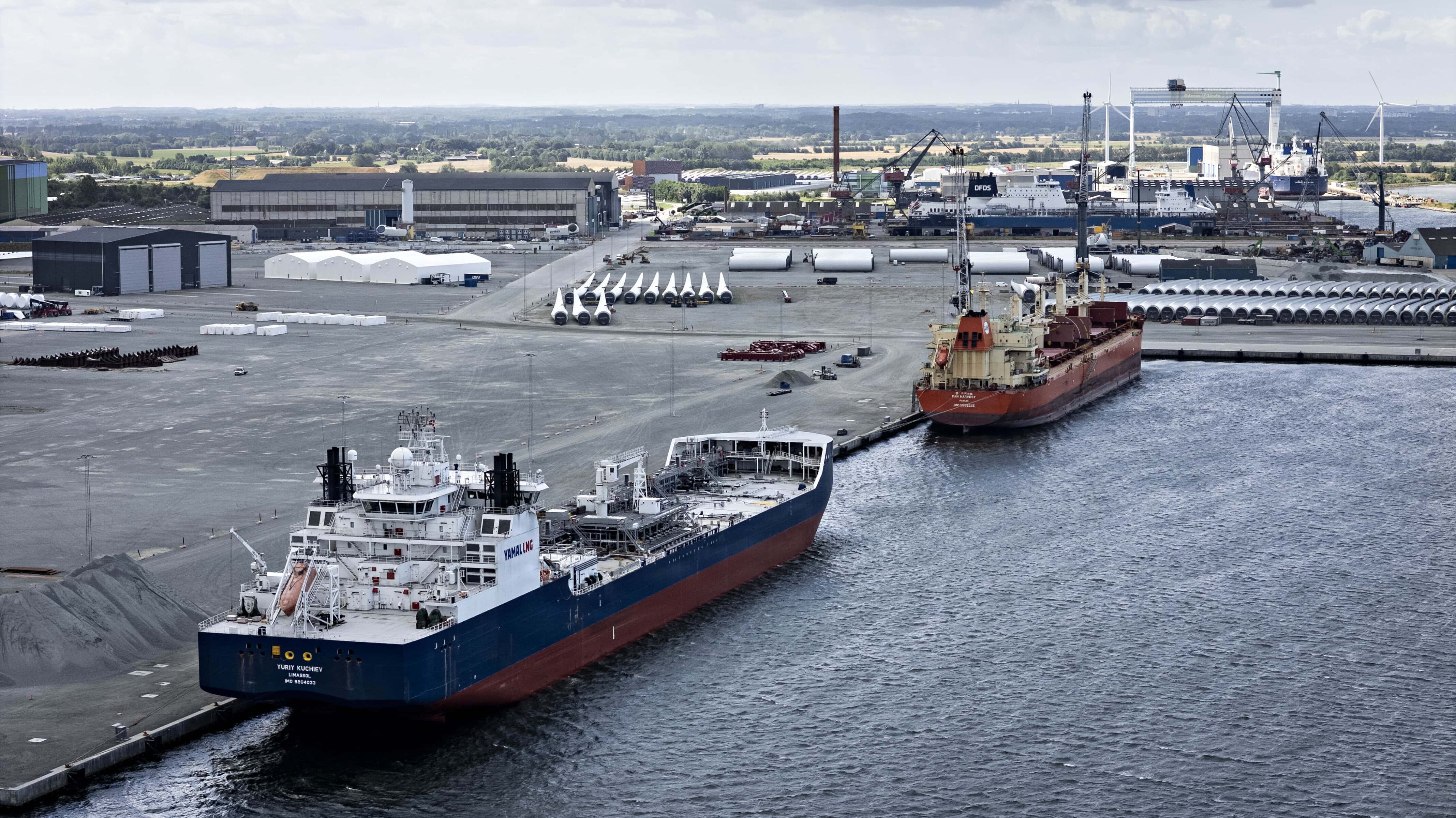
A recent example, which Danwatch has previously written about, is the tanker Nikolay Yevgenov, which on 2 September unloaded 73,000 tonnes of Russian LNG in Dunkirk, France.
After that, the ship sailed directly on to be serviced at the Danish shipyard Fayard.
According to Urgewald, 159 out of a total of 180 deliveries from Yamal up to the beginning of September went to European ports.
Russian billion-kroner revenues and strategic significance
Europe remains by far the most important LNG market for the Yamal facility, located in the ice-filled Russian Arctic in northern Russia, from where the gas on board the six tankers is exported.
The ships sail on long-term contracts for Yamal Trade, which handles all sales and transport of gas from the Yamal facility. The facility is one of Russia’s most economically important energy installations and is controlled by the Russian gas company Novatek.
This means the six ships, under Danish-owned management, form part of the gas business that generates billion-kroner revenues for Novatek.
According to Novatek’s annual report, the company last year paid around 280 billion roubles in tax—equivalent to just over DKK 22 billion—to the Russian state.
According to Jeremy Morris, Professor of Russian Studies at Aarhus University, the sale of LNG from Yamal has more than just economic significance for Russia.
The most important thing about Yamal is not necessarily the tax revenues, but that Europe remains a crucial market.


“The most important thing about Yamal is not necessarily the tax revenues, but that Europe remains a crucial market. That makes Russian LNG strategically important for both Russia and Europe and helps to maintain European and Chinese economic interests around Russian energy,” says Jeremy Morris.
He also points out that pressure on the Russian economy means that even smaller sources of income become more significant.
“LNG accounts for a relatively small share of Russia’s total oil and gas revenues, but in a strained war economy even marginal revenues matter. Russia has tried to compensate for falling energy revenues with higher domestic taxes, but it has not been able to plug the gap,” says Jeremy Morris.
Seapeak profits from both operations and ownership
Through a joint venture, TC LNG Shipping, Seapeak owns half of the six tankers that sail with Russian LNG.
Last year, TC LNG Shipping had revenues of around DKK 1.74 billion and at the same time paid at least DKK 55.7 million to other companies in the Seapeak group for, among other things, ship operations, administration and services linked to Yamal shipments.
Seapeak thus has both income linked to the commercial operation and a major financial interest in the ships themselves, as well as freight revenues.
Behind the Seapeak group is the US private equity firm Stonepeak as owner.
“There are only 15 Arc7 tankers (ships built to sail through thick Arctic sea ice, ed.) in the world, and Russia cannot simply replace them overnight. That is why this is one of the areas where pressure on Russian gas can be felt most,” says Luke Wickenden.
Expert: “It may create sanctions-related challenges”
The transfer of operational tasks to Danish ownership took place at the same time as the EU and the UK tightened sanctions and introduced new restrictions specifically targeting Russia’s LNG exports and the service and shipping industry involved.
At the same time, the EU requires European companies that own or control companies outside the EU to ensure that the foreign companies do not take part in activities that undermine sanctions against Russia.
According to sanctions expert and lawyer Lars Brodersen from TradeCompliance.dk, EU sanctions also apply to EU citizens and EU companies outside the EU.
“The decisive factor will therefore be to assess whether the EU company owns and controls the company carrying out the transactions. And if these transactions contravene EU sanctions against Russia, it may create sanctions-related challenges for the EU parent company,” he says.
Danwatch has repeatedly asked Seapeak’s management in Denmark what responsibility the Danish holding company has for the activities of the Singapore company, and whether the new sanctions may affect the Danish ownership structure around the operation of the ships.
The company has still not responded.