The Shadow Fleet
According to experts and politicians, the Russian shadow fleet is Russia's response to Western sanctions. Ships transport oil from Russia without Western authorities being able to monitor what's happening. This way, the oil can be sold for more than what the sanction-imposed price cap allows.
The shadow fleet consists mainly of older tankers that have been purchased over the past two years by companies that are difficult to scrutinize. They almost exclusively transport Russian oil and are registered in countries outside the EU and G7 nations.
The ships typically have opaque ownership structures and unknown, questionable, or non-Western insurance, such as Russian insurance companies. This has led to British and American sanctions specifically naming several Russian insurance companies.
The ships often sail under flags of countries with less oversight, such as Cameroon or the military dictatorship of Gabon in Africa, but they can also operate under flags of countries like Panama, Liberia, Vietnam, and others. The ships frequently change names and flags because they often change owners. According to experts, this is done to obscure the trail to the actual owners.
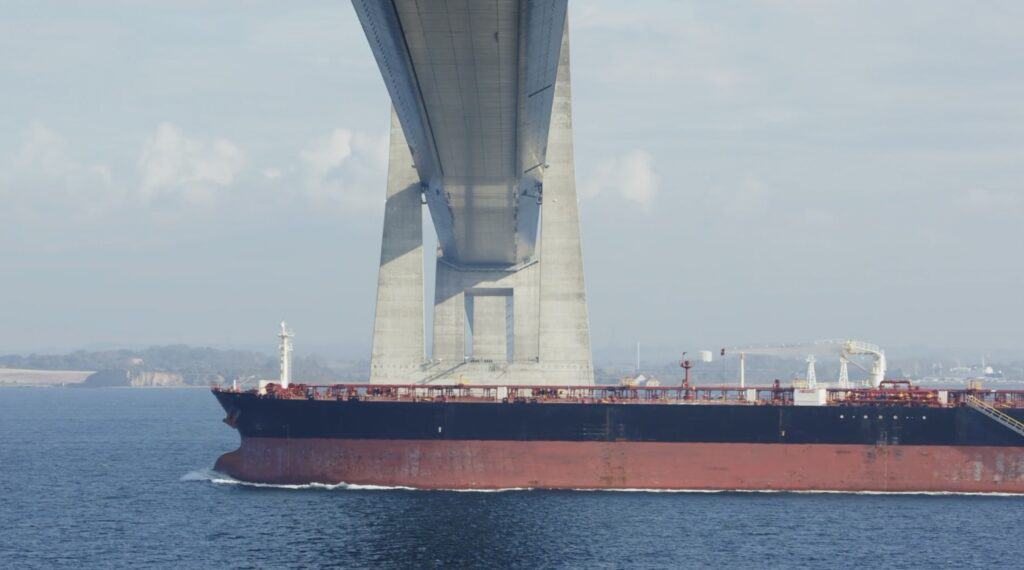
These large tankers sail through Denmark and the Great Belt daily, as it's the only route out for fully loaded tankers coming from the major Russian oil ports around St. Petersburg.
Government leaders like Prime Minister Mette Frederiksen have identified the shadow fleet as a major concern and a problem that the West must address. Therefore, NATO ships have been deployed in the Baltic Sea to monitor and protect the area from oil disasters and sabotage of undersea cables.
Sources: Lloyd's List Intelligence, CREA, Kyiv School of Economics, OFSI, OFAC


Undersøgelsen delt op i artikler
Former Spetsnaz Leader Suddenly Appeared on Dark Fleet Ship in Øresund

Military Uniforms and Total Secrecy: Eyewitness Raises Alarm about Russian Oil Tankers


Forged papers and a fake company: How Russian businessman cheats Danish authorities

Pension funds and taxpayers money can be linked to Putin's dark fleet


Denne undersøgelse har fået et efterspil
