

Part of an investigation
This article is a part of the investigation The Nuclear Files
- Through systematic research in open-source databases, Danwatch has collected more than two million documents linked to Russian military procurement.
- The trove of documents contains hundreds of original blueprints detailing the layout of several Strategic Missile Forces bases across Russia.
Among the documents are hundreds of original floor plans of Strategic Missile Forces bases across Russia. - It offers unprecedented insight into President Putin’s massive modernization of some of the world’s most highly secured nuclear weapons facilities — a process in which several Western companies turns out to have played a key role.
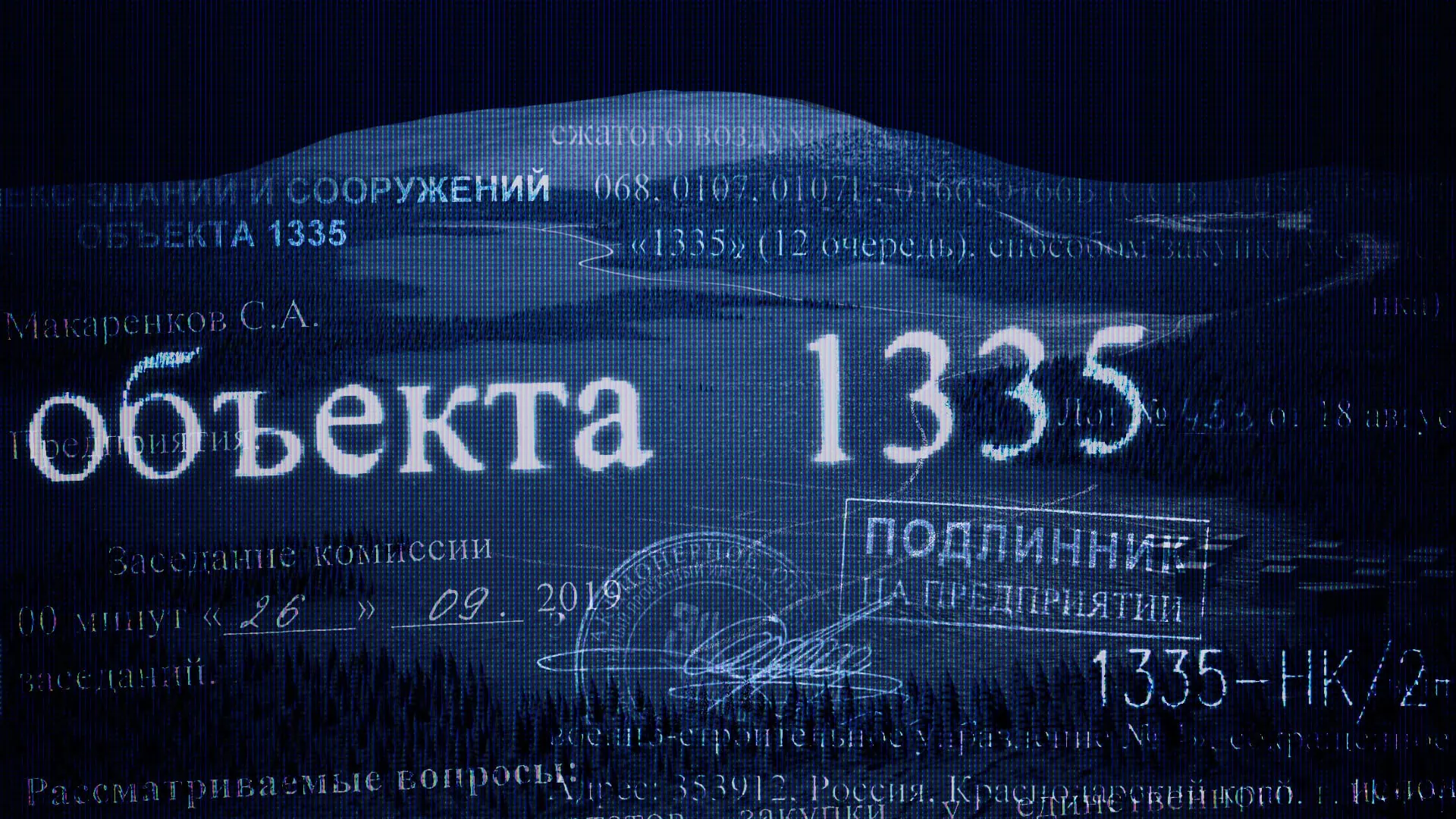
While the world’s attention was focused on the war in Ukraine in 2022, products from two Danish industrial giants were used in the upgrade of the crown jewel of Russia’s nuclear weapons programme: Facility 1335.
This is shown by a systematic review of more than two million tender documents from Russia’s military, carried out by Danwatch.
As Danwatch recently revealed together with The Times and Dossier Center, Russia has carried out a massive upgrade of Facility 1335, a large underground bunker inside Mount Kosvinsky near the town of Kytlym.
From here, Russia can issue launch orders to every missile in the country’s nuclear arsenal if the country is ever attacked with nuclear weapons.
FACTS
The doomsday system
- Facility 1335 is located in the small village of Kytlym and consists of a military base and an underground complex inside Mount Kosvinsky, which the Ministry of Defence in Moscow has expanded and reinforced since 2018.
- According to leading experts and senior sources in the Russian military, the purpose of the work on Object 1335 has been to equip the facility with a modern version of a notorious Cold War system which, with a high degree of automation, can bypass normal command channels and communicate directly with the missiles that carry nuclear warheads.
- The sources describe the system as the crown jewel of Russia’s nuclear deterrent: the central node in a nuclear retaliation system designed to relay launch orders across Russia to every missile in the country’s nuclear arsenal if Russia is subjected to a surprise attack.
- The system’s technical name is Perimetr. In the West, it is known as the
Dead Hand .
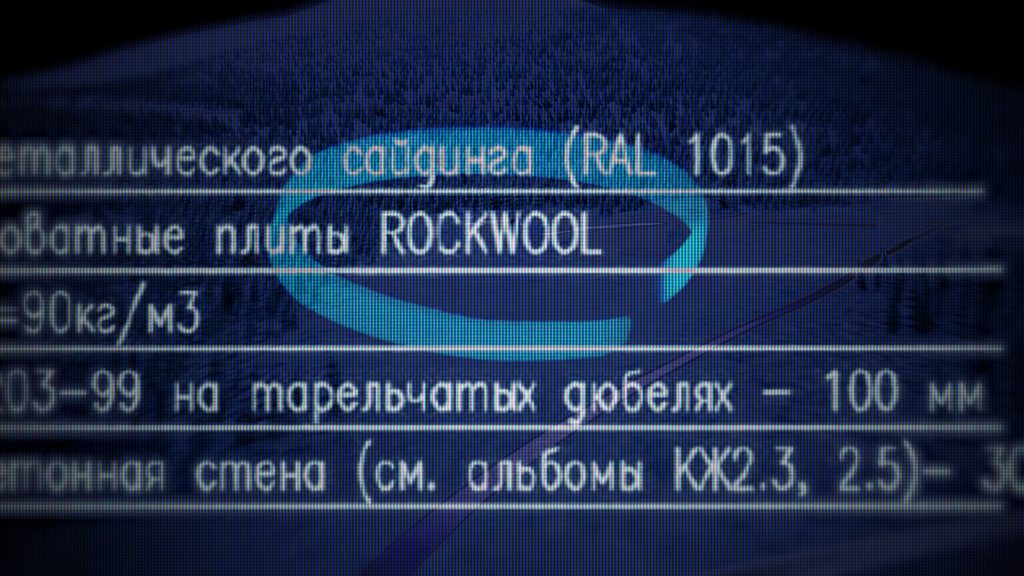
And the Danish footprint in Facility 1335 is significant. Rockwool and Danfoss have, among other things, produced 31.1 kilometres of pipe insulation, 340 kg of adhesive, and thousands of valves that have ended up in the doomsday mountain.
FACTS
How big the construction was
Danwatch has systematically reviewed nearly 2.5 million military tenders from Russia.
We identified thousands of tenders for “Facility 1335” from the period 2018 to August 2024, including products from Rockwool and Danfoss. In addition, products have also been supplied by a number of companies in other European countries such as Italy, Germany and Switzerland.
The tenders fall under the “State Defence Order” and were carried out by the 8th Main Directorate for Military Construction on behalf of the Ministry of Defence in Moscow.
The many purchases reveal materials for a massive construction project—including three times as much steel as in the Eiffel Tower, and enough cement to build a high-rise building 30 to 40 stories tall:
- At least 22,000 tonnes of steel, 170 km of steel pipes and 41,000 assorted steel components.
- At least 56,500 tonnes and 7,500 m2 of cement.
- 13,000 tonnes and 75,000 m3 of construction sand and crushed stone.
- 600 kilometres of cables, 14,000 lamps, 30 transformers.
- 3.2 million litres and 500 tonnes of fuel.
- More than 820,000 litres of gas.
- 143 tonnes and 61,000 litres of paint.
- 95 heavy machines and 648 rock drilling components.
- More than 200 explosion-proof electric heaters.
- 182 ventilation units.
- 21 electrical substations.
The list represents a
Danfoss today denies that it was aware that the company’s products were to be used in Facility 1335.
“We have reviewed the information we still have access to and have not found anything documenting that, at the time of sale, there was knowledge that the valves were to be used at the facility you refer to. On the contrary, it appears they were sold to distributors, without insight into whether they were to be resold.”
At Rockwool, Rasmus Windfeld points, among other things, to the fact that all sales in Russia took place locally through distributors.
“As we have previously replied to Danwatch and others in this case, we are aware of sales as mentioned in your email. We do not know the precise circumstances, as the sales took place from the local companies and via a distributor.”
Not by chance
In total, Danwatch has identified ten purchases of Rockwool products in the period from 2020 to 2022, made by construction companies under the Russian Ministry of Defence. Two of them took place after the start of the war in Ukraine in February 2022.
In addition to large quantities of pipe insulation and adhesive, Rockwool insulation was used to cover a total area of 2,190 square metres, while other insulation boards are specified as needing to amount to 650 cubic metres.
Facility 1335 falls under the Strategic Missile Forces—and there has also been strong demand for Danfoss’ products.
Danwatch found five contracts from 2020 to 2022 for a total of 2,458 Danfoss components, primarily shut-off and control valves. One of the purchases of Danfoss products took place in July 2022—five months into the war in Ukraine.
FACTS
Rockwool and Danfoss in Facility 1335
Danwatch has systematically reviewed purchases of products from Rockwool and Danfoss for Facility 1335. In total, we have identified the following tenders in which units under Russia’s Ministry of Defence purchased products from the two Danish companies. The winners of the orders were external distributors:

16 June 2020
- 1,000 m Rockwool pipe insulation
20 July 2020
- 79.62 m3 Rockwool “Roof batts”

12 August 2020
- 9 pcs. Danfoss valves
- 2 pcs. Danfoss air vent valve (Airvent)
18 August 2020
- 3,899 m Rockwool pipe insulation
6 October 2020
- 200 m3 Rockwool “Tech batts 100”
18 November 2020
- 168 pcs. Danfoss shut-off and control valves
3 December 2020
- 11,458 m Rockwool pipe insulation
- 6.25 m3 Rockwool “Tech batts”
18 December 2020
- 1,023 pcs. Danfoss shut-off and control valves
1 January 2021
- 106.74 m3 Rockwool “Tech batts 100”
- 13.67 m3 Rockwool “Technolight OPTIMA”
- 12.24 m3 Rockwool “Sandwhich batts”
- 340 kg Rockwool “Conlit adhesive”
18 March 2021
- 1,103 pcs. Danfoss shut-off and control valves
21 June 2021
- 14,812 m Rockwool pipe insulation
- 28.5 m3 Rockwool “Tech matt”
2 February 22022
- 3.6 m3 Rockwool “Tech mat”
- 10 m2 Rockwool “Alu Wired Mat 105”
23 May 2022
- 200.4 m3 Rockwool “Roof Batts”
- 1,500 m2 Rockwool “ROCKbarrier”
6 June 2022
- 680.2 m2 Rockwool “Venti Batts D”
1 July 2022
- 153 Danfoss valves

insulation rolls
insulation mats
pipe insulation

valves
adhesive


The tender material also shows that it is not by chance that the Danish products ended up in the top-secret nuclear weapons bunker.
In several places, the contracts refer to Russian legislation stating that, in connection with Facility 1335, products from Rockwool and Danfoss must specifically be supplied—not equivalent materials. It also states which buildings the materials are to be installed in.
Among other things, a floor plan for a newly built officers’ residence at the military base by Facility 1335 shows that Rockwool was specified directly from the early design phases.

The contracts show that in all 15 cases it was local distributors that supplied the Danish products.
Overall, the contracts amount to a few million kroner. The two largest contracts for Rockwool products totalled DKK 1.3 million, while the two largest Danfoss purchases were DKK 945,000.
In addition, products have also been supplied by a number of companies in other European countries such as Italy, Germany and Switzerland.
Not in breach of sanctions
It would, in all likelihood, have been in breach of EU sanctions if Danfoss and Rockwool, after April 2022, had exported the products that ended up in Facility 1335 from Denmark to Russia. That is the assessment of Jeff Nielsen, a lawyer specialising in international sanctions and export controls.
A tightened export ban entered into force, which includes, among other things, valves and insulation.
However, at that time the two Danish industrial giants had factories in Russia, where the products were most likely manufactured. This means the factories are subject to Russian law and therefore, as a rule, are not covered by EU sanctions.
It was not until 2024 that responsibility was tightened for companies in Denmark and the rest of the EU with subsidiaries in Russia, Jeff Nielsen says.
“At that time, there was no requirement under the sanctions for Danfoss’ and Rockwool’s EU headquarters to prevent their Russian subsidiaries from supplying the goods described.”
“It only became part of the legislation when the requirement to make a ‘best effort’ was set out in June 2024,” he says.
Jeff Nielsen explains that the background was that, in the first months after Russia’s invasion of Ukraine in 2022, the EU worked intensively to introduce sanctions across a wide range of areas targeting the Russian economy, which had significant ties to Europe.
“Therefore, this issue—like many others—was not addressed until a later point,” he says.
According to Jeff Nielsen, companies also have responsibilities beyond the sanctions in force. Both Rockwool and Danfoss have signed up to the UN Guiding Principles on Business and Human Rights (UN Guiding Principles).
This includes, among other things, that the two companies must carry out so-called due diligence, including identifying and preventing negative impacts that may be derived from the company’s products.
“In that regard, it is relevant to ask whether Danfoss and Rockwool carried out any form of due diligence at the time regarding where their products in Russia ended up—and, if so, what they specifically investigated and what the outcome was,” he says.

Denies responsibility
Danwatch presented the sales to Facility 1335 to Rockwool and Danfoss and asked a number of questions, including what they did to ensure their products did not end up with the Russian military.
In a written reply, Danfoss writes that the products referred to are “standard valves, which are sold widely for, among other things, heating, cooling and water installations, but especially space heating.”
“The terms of sale that applied in Russia at the time stated that the products were intended for civilian use and must not be used or resold for purposes connected to chemical, biological or nuclear weapons. If the components have in fact ended up at the installation you describe, that is of course not a use we want.”
Rockwool retained ownership of four Russian subsidiaries until January this year, but they have now been taken over by the Russian authorities and placed under so-called external administration.
Rockwool press officer Rasmus Windfeld also does not answer what the company has specifically done to avoid Rockwool’s products ending up in Facility 1335. Instead, he points to the fact that the company was previously ‘cleared’ by the Danish Business Authority after Danwatch revealed that Rockwool products had been used in a number of warships in the Russian navy.
“As we have also described, the Danish Business Authority has likewise previously investigated our historical sales and in that connection confirmed that everything took place in accordance with the applicable sanctions.”
Rasmus Windfeld further states that “in accordance with the applicable sanctions, our Russian factories were placed under passive ownership after Russia’s full-scale war. We have no further comments.”
Danwatch has also tried to obtain a comment from Rockwool’s current management in Russia as to whether the company knew that products ended up in Facility 1335. The company has not responded.
Not by chance
Tom Røseth, an expert in Russian security policy and chief instructor in intelligence studies at the Norwegian Defence University College, assesses that the products in Facility 1335 could cast the two Danish industrial giants in a bad light.
“This is an extremely expensive and extensive modernisation of the facility (Facility 1335, ed.), and it is not by chance that the two companies’ products are included.”
“It can therefore likely damage the companies’ reputations, especially in light of the current threat picture and the facility’s destructive military role.”
He also expects that Rockwool and Danfoss did everything they could to ensure that their subsidiaries in Russia did not sell products that could end up in military facilities such as Facility 1335.
“Even if the Danish companies’ products were not subject to sanctions at the time, it would clearly be problematic to knowingly sell one’s products to the Russian military—or to do so indirectly or evasively through third parties,” he says.
“Nor is it proactive responsibility if you have simply remained passive in a situation that will shape Europe’s security situation for decades to come,” he says.
This is far from the first time Danwatch has revealed that products from Danish companies have ended up in Russia’s nuclear weapons programme. Products from Danfoss, Grundfos and Rockwool are installed at a number of nuclear weapons bases in the city of Yasny.